Insight
Use the difficulty !
I lost my first fight at the Abu Dhabi Jujitsu World Pro competition.
Not the final. Not after a long day of battles. The first one. 5 minutes on the mats and I was out.
When it happened, I stood there for a few seconds not really understanding what I was feeling. Then it came—fast and heavy. A mix of disappointment, anger, and a quiet shame I didn’t expect to feel so strongly.
I had trained. I had visualized. I had imagined my kids touching the medal again.
And suddenly, it was over before it even began.
The hardest part wasn’t losing. It was the voice in my head right after: “Was all this effort worth it?” “Did I really belong here?” “Maybe this is your ceiling.”
That kind of loss doesn’t hurt the body. It hurts the identity.
For a moment, I wanted to rush past it. To intellectualize it. To say “it’s part of the game” and move on. But the truth is—I didn’t want lessons yet. I wanted to sit with the pain.
Because pain, when you don’t escape it, speaks. This loss wasn’t here to humble me. It was here to recalibrate me. It showed me where I still hesitate. Where I still protect my ego instead of risking everything. Where comfort quietly replaced hunger.
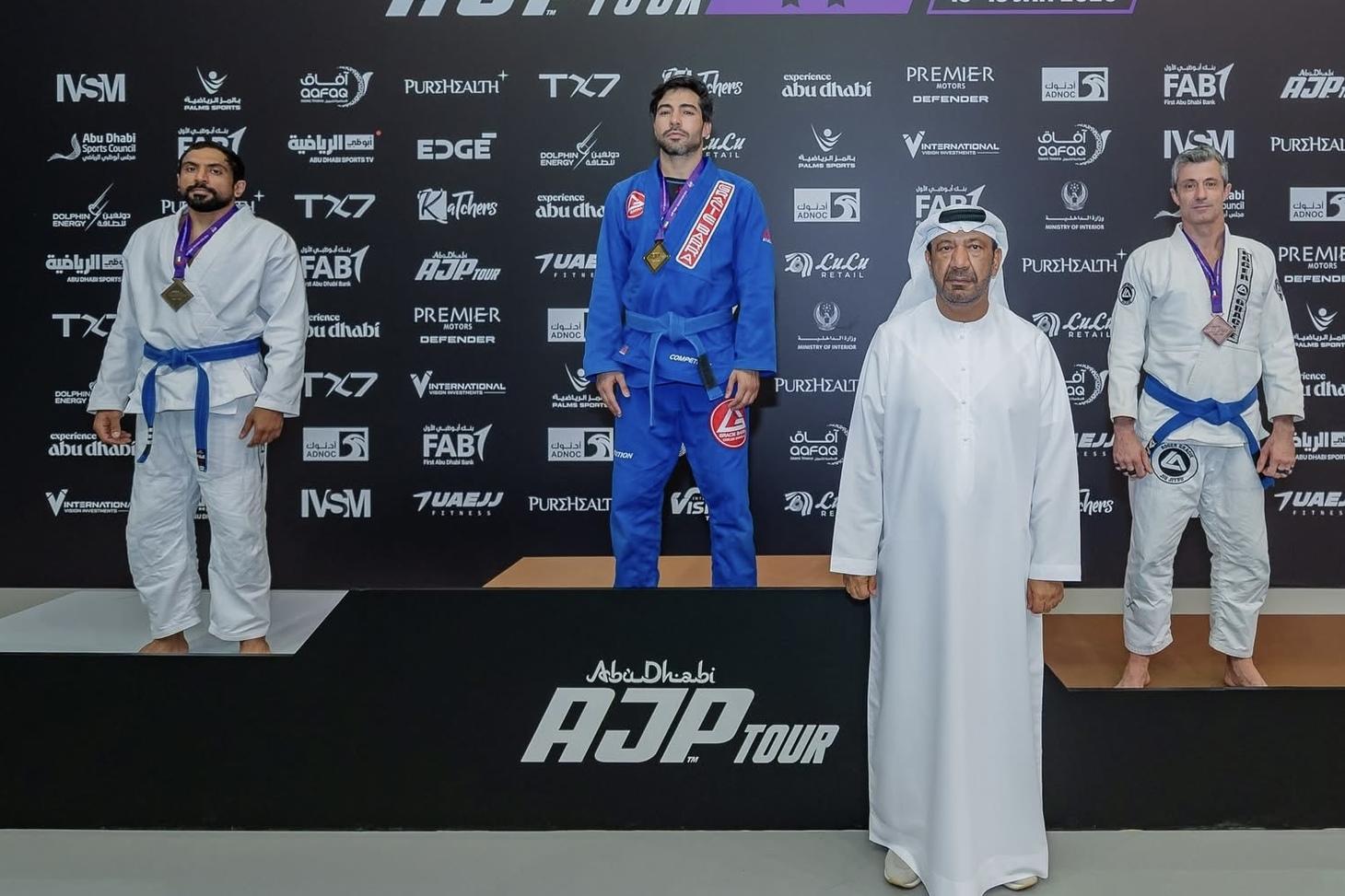
The very next day after my loss, I registered for another international championship, also in Abu Dhabi. I trained for weeks with a level of determination and motivation I had never felt before. I turned that defeat into fuel.
A few months later, I stepped back onto the same mats where I had been beaten. This time, I fought with total presence — blocking out the crowd, focused with a razor-sharp intensity to the point that I couldn’t even hear my coach’s instructions during the matches (which he wasn’t too happy about).
I reached the final and won my first gold medal.
That experience is a reminder of how using difficult moments by facing them, absorbing them and using them to your advantage is often a catalyst.
The Missing Chair
There’s a story Michael Caine tells about a defining moment early in his career.
He was a young actor, rehearsing a scene in a play. As he prepared to enter the room, a chair got stuck in the doorway and completely blocked his path.
He stopped the rehearsal and told the other actor, “I can’t get into the room—the chair is in the way.”
The other actor looked at him and said something that would stay with him for life:
“Use the difficulty.”
He continued: “If it’s a comedy, fall over the chair. If it’s a drama, pick it up and smash it.”
That moment changed everything for Michael Caine.
He later said: “There’s never anything so bad that you cannot use that difficulty. If you can use it even a quarter of one percent to your advantage, you’re ahead—you didn’t let it get you down.”
That idea hit: The chair wasn’t the problem. Stopping because of it was.
The obstacle didn’t need to be removed. It needed to be used.
Life does this all the time. It blocks your entrance. It disrupts your plan. It puts something heavy, awkward, unfair right in your way—and waits.
Not to see if you avoid it. But to see how you respond.
You can’t control the difficulty. But you can control your reaction to it. Your attitude toward it. Your willingness to turn it into momentum.
The Man at the Gym
At my gym, there’s a man with no legs. Yes no legs. The first time you notice him, everything in you slows down. Not out of pity—but out of disbelief. Your brain searches for the instinctive reaction it has been trained to use. And before you can even label the thought, he’s already working.
Pull-ups. Dips. Heavy presses. Long sets that burn the shoulders and arms until most people would stop.
Day after day, he shows up. Same intensity. Same discipline.
He didn’t wake up one morning strong. What you see today is the result of years of ruthless consistency. He studied his body. Learned angles. Adjusted leverage. Strengthened joints most people take for granted. While others chased shortcuts, he chased mastery.
Where most people would have focused on what they lost, he obsessed over what he could still build. He turned his upper body into a weapon—not to prove anything, but to reclaim control.
Eventually, people stopped seeing “the man with no legs.” They started seeing the coach.
Today, he’s a well-known fitness instructor in our community with a strong social media presence, calling himself the Bionic Man—a nod to the prosthesis he proudly shows and an upper body that would make any man envious.
He trains athletes with full mobility. He corrects posture. He demands effort. He pushes limits.
And the irony is striking: people who have everything often complain to someone who built greatness with less.
Often, we negotiate with our limits instead of confronting them. How easily we use inconvenience as an excuse. He didn’t wait for motivation. He built discipline first—and confidence followed.
He didn’t transcend his condition by ignoring it. He transcended it by working with it.
The Short Guy Who Refused the Narrative
A close friend of mine is short. Not “a little below average” short — noticeably short. The kind of short that people feel entitled to joke about. The kind that invites comments disguised as humor and advice disguised as concern.
He grew up hearing it all but he never fully bought into that story.
He launched an Instagram page. Not to complain. Not to justify himself. Not to preach confidence.
Simply to own his presence.
His message is bold in its simplicity:
Dressing well matters more than height.
Every week, he posts a new outfit. New combinations. Clean fits. Intentional colors. Sharp silhouettes.
You start to notice something when you scroll his page: you stop seeing his height. You start seeing his style, his posture, his confidence, the way he carries himself.
He doesn’t pose like someone trying to compensate. He stands like someone who has accepted himself completely.
And people follow him.
Not because he’s tall. Not because he’s loud. But because he is deliberate.
Because he understands something most people don’t:
Presence is not given. It is built.
He didn’t accept the narrative handed to him by the world. He didn’t argue with it either.
He simply rewrote it — one outfit, one post, one confident step at a time.
The Thread That Connects It All
A loss on the mats. A missing chair. A body without legs. A man shorter than the standard.
Different stories. Same question:
What will you do with what you’re given—and what you’re denied?
Pain tries to convince us we’re not enough. Difficulty whispers that this is where it ends.
But every person I admire did the opposite. They leaned in. They stayed present. They used the difficulty instead of escaping it.
My loss reminded me that growth doesn’t come from winning alone. It comes from the moments where you’re exposed, uncomfortable, and forced to look inward.
So if you’re hurting right now— If something didn’t go the way you dreamed— If life removed a chair you were counting on—
Good.
That friction might be shaping something far more powerful than success ever could.
Use the difficulty.